What Should I Know Before Buying My First ATV in Ontario?
 Print
 Contact Us
 Share this


Quick answer: Before buying your first ATV in Ontario, it’s important to know that your machine must be registered and insured with at least $200,000 in third-party liability coverage to ride anywhere off your own property. Most trail systems require a separate OFATV trail permit, and Ontario law mandates an approved helmet for every rider. On the buying side, beginners should look for a 350cc–570cc machine, decide between a utility or recreational ATV, and budget for gear and accessories on top of the $3,000–$12,000 purchase price.
What Legal Requirements Apply to ATV Owners in Ontario?
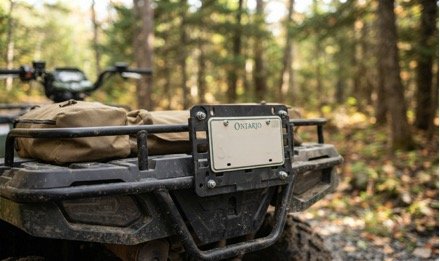
Ontario regulates ATVs under the Off-Road Vehicles Act (ORVA) and the Highway Traffic Act, with rules that are often stricter than first-time buyers expect. Every off-road vehicle — including ATVs, UTVs, and side-by-sides — must be registered with the Ministry of Transportation and display a licence plate, except in a few exempt areas in far northern Ontario.
These registration and insurance rules kick in the moment you leave your own property. Whether you’re riding on Crown land, a road allowance, a friend’s trail, or an OFATV trail system, your ATV must be registered and insured — there’s no casual “just riding around the block” exception.
Do You Need Insurance, Registration, and a Driver’s Licence?
Yes, for almost every riding situation. Section 15 of the Off-Road Vehicles Act requires ATVs to carry a motor vehicle liability policy with a minimum of $200,000 in third-party liability coverage whenever used off your own land. The only narrow exception is riding strictly on your private property, though many experienced riders insure their ATVs anyway because accidents can be serious.
To cross a highway where allowed, Ontario requires the driver to be at least 16 years old with a valid driver’s licence of any class. Both driver and passengers must wear an approved motorcycle helmet, securely fastened with a chin strap. Registration is done through ServiceOntario, and most dealers — including our team at Maxxim Motorsports — can guide you through the paperwork when you buy. If you're also riding motorcycles, we've broken down what affects your rate in our article on motorcycle insurance costs in Ontario.
What Trail Permits Do You Need?
Most managed ATV trail systems across Ontario are maintained by member clubs of the Ontario Federation of All-Terrain Vehicle Clubs (OFATV). Riding these trails requires a separate trail permit on top of your provincial registration.
As of late 2025, an annual OFATV permit costs $195 for new or expired permits, $175 for early or on-time renewals, with short-term options at $30 for a single day and $70 for three consecutive days. Family permits offer discounts for households purchasing more than two.
Remember, registration and trail permits serve different purposes: your provincial permit and plate make your ATV legal to operate, while the OFATV permit grants access to specific club trail networks.
What Does Ontario’s Helmet Law Require?
$195
Cost of a new annual OFATV trail permit as of late 2025, required for most managed trail systems.
Ontario law is clear: every driver and passenger on an ATV must wear an approved motorcycle or off-road helmet, properly fastened with a chin strap, whenever riding off private property. This isn’t just a recommendation — it’s written into the Off-Road Vehicles Act and enforced on OFATV trails, which accept helmets certified to CSA-D230, DOT, Snell, BSI, or UNEC No. 22 standards.
34 ATV-related deaths investigated by the OPP across Ontario in 2024, with roughly half of riders unhelmeted.
$200,000 Minimum third-party liability insurance required to ride an ATV off your own property in Ontario.
“The single biggest misconception new ATV buyers have is that insurance and registration are optional for casual riding. In Ontario, the moment you leave your own property, both are the law — and the OPP actively enforces it on Crown land and trail systems.”
What Size ATV Is Best for a Beginner?
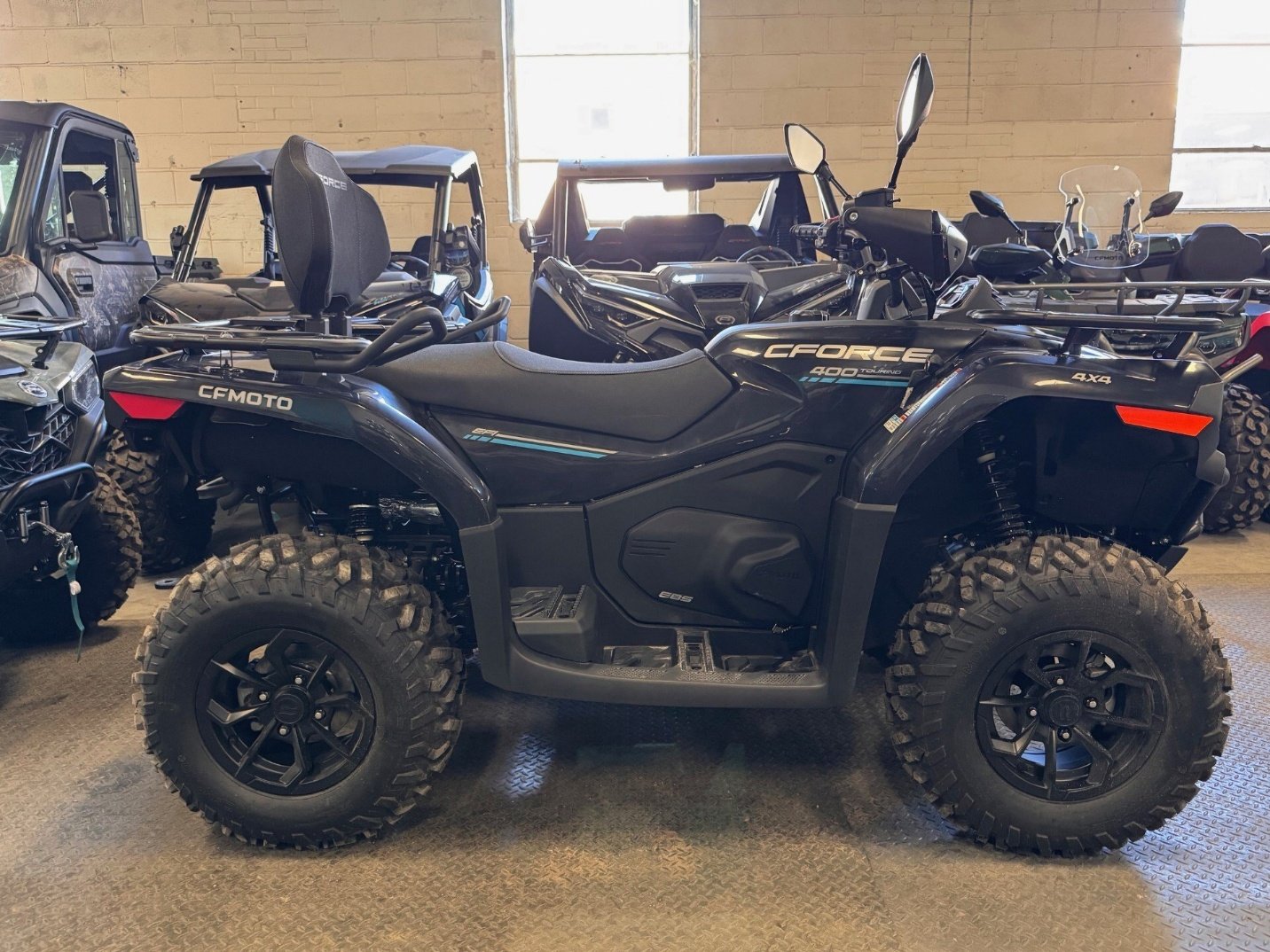
Bigger isn’t always better for your first machine. Most first-time riders do best with a 350cc to 570cc ATV — often called the “450 class.” This size offers enough power for trail riding and light property work while staying manageable for building throttle control and braking confidence.
Starting on an 800cc or larger machine can be overwhelming and is where many avoidable accidents happen.
Look for Electronic Power Steering (EPS) on your first ATV. It significantly reduces steering fatigue on long rides and makes low-speed handling easier, especially on rocky or uneven terrain. Independent rear suspension is another feature to prioritize, as it improves stability and comfort compared to older solid-axle designs.
Utility ATV vs Sport ATV: Which One Should You Choose?
The right type depends on how you plan to use your ATV. Utility ATVs are built for towing, hauling, and working around a property or hunting camp, with racks, higher payload capacity, and a more upright, work-focused design.
Recreational or sport ATVs are lighter, more agile, and better suited for trail riding and technical terrain but aren’t designed for heavy hauling or towing.
If you’re unsure, think about your most frequent use. Someone who tows a trailer twice a summer but rides trails every weekend is better off with a nimble recreational ATV than a heavier utility model.
If you’re still deciding which off-road vehicle is right for you, our article on What Is the Difference Between UTV, ATV, and Side-by-Side? explains the key differences, ideal uses, and which option may be the best fit for your riding style.
Should You Buy a New or Used ATV?
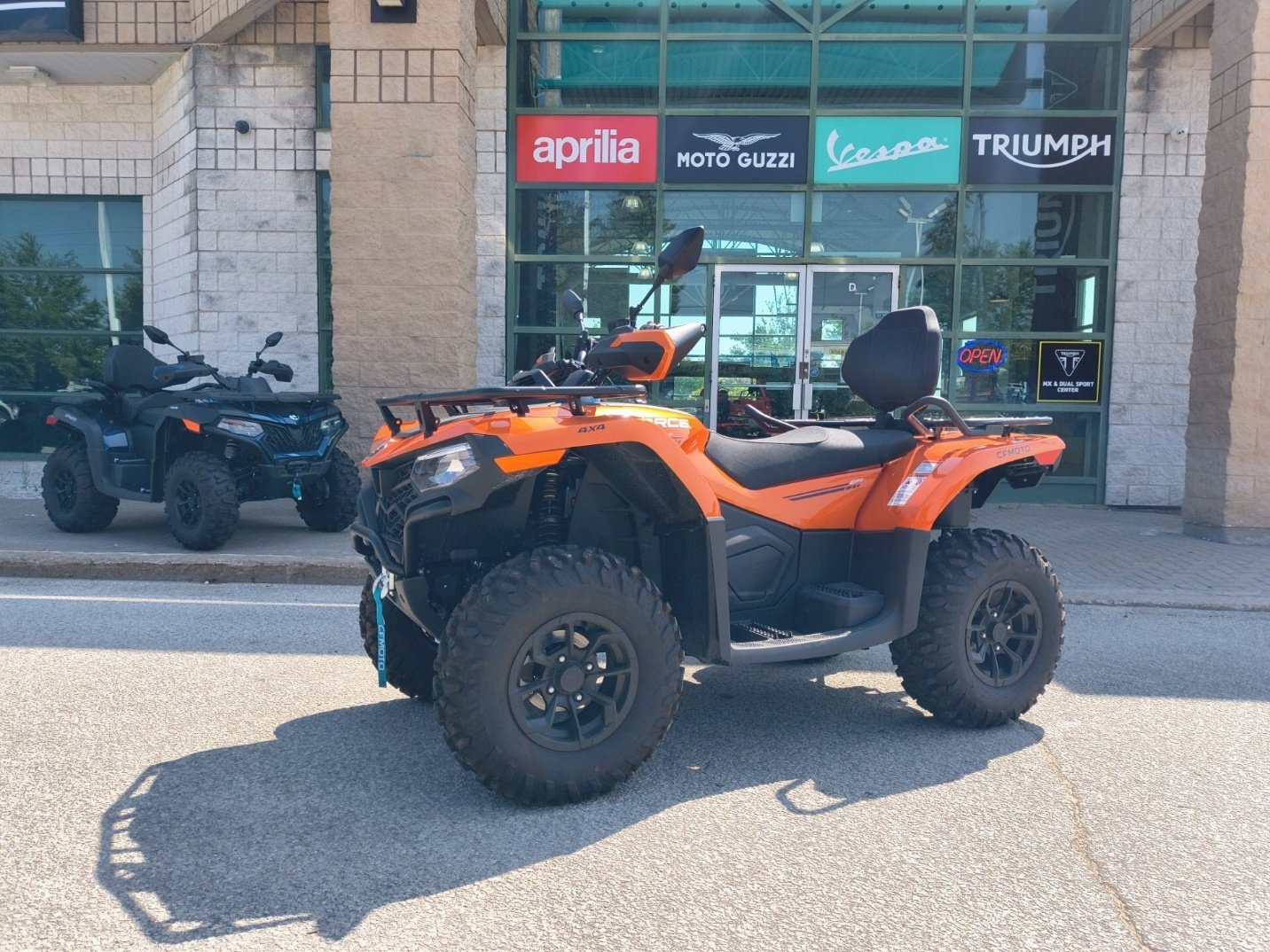
New entry-to-mid-level ATVs in Ontario typically cost between $5,000 and $12,000, while used models start around $3,000 depending on age, condition, and hours.
New machines come with a manufacturer warranty and no unknown history, which matters more than many expect. A used ATV with hidden engine or drivetrain issues can quickly wipe out any savings.
If you buy used, insist on a bill of sale for registration, ask for maintenance records, and have a dealer technician inspect the chain, tires, engine compression, and electrical system before committing. Buying from a registered dealer also protects you from stolen ATVs being sold privately.
How Much Does ATV Ownership Really Cost?
The purchase price is just the beginning. Between registration, insurance, trail permits, gear, and routine maintenance, most first-year owners spend an additional $800 to $1,500 beyond the ATV itself — before considering accessories like a winch, storage box, or windshield.
| Cost Item | Typical Range | Frequency |
|---|---|---|
| New ATV (entry to mid-level) | $5,000 – $12,000 | One-time |
| Used ATV | $3,000 and up | One-time |
| OFATV annual trail permit | $175 – $195 | Annual |
| Off-road liability insurance | Varies by rider/machine | Annual |
| Provincial registration | Set by ServiceOntario | Annual renewal |
| Helmet and safety gear | $200 – $600 | One-time, replace as needed |
| Routine maintenance (oil, filters, tires) | Varies by usage | Ongoing |
What Safety Gear Do You Need Before Your First Ride?
- Approved helmet — required by law, must be securely fastened with a chin strap.
- Over-the-ankle riding boots — protects against impact and hot exhaust components.
- Riding gloves — improves grip and protects hands in a fall.
- Eye protection or goggles — especially important on dusty or debris-heavy trails.
- Long sleeves and pants — required on most OFATV trail systems, reduces scrapes and sun exposure.
Common ATV Buying Mistakes First-Time Buyers Make
The biggest mistake is buying more engine than you need because it “feels exciting” in the showroom, then finding it intimidating on the trail. Another is underestimating ongoing costs — budgeting for the ATV but forgetting insurance, trail permits, and gear, then getting blindsided by extra expenses.
Buying without local dealer support is another regret. Parts availability, warranty service, and advice on trail conditions or accessories matter far more once you own the machine than during the sales process.
How to Choose the Right ATV for Trail Riding, Hunting, or Property Work
For trail riding, prioritize a lighter recreational ATV with EPS and good ground clearance for technical terrain. For hunting or property work, a utility ATV with rack capacity and towing rating is better, even if less nimble on tight trails.
If you need both, many riders start with a mid-size utility ATV that handles moderate trail riding and hauling gear.
Ready to find the perfect ATV for your needs? Visit the Maxxim Motorsports showroom today to explore our wide selection, get expert advice, and take a test ride. Our team is here to help you choose the right machine for your adventures. Plan your visit now!
Frequently Asked Questions
Do I need insurance for an ATV in Ontario?
Yes, in almost every situation. Under Ontario’s Off-Road Vehicles Act, any ATV ridden anywhere other than land you personally own or occupy must carry a minimum of $200,000 in third-party liability insurance. The only exception is riding strictly on your own private property.
What size ATV should a beginner buy?
Most new riders do well starting in the 350cc to 570cc range, which offers enough power for trails and property work without being difficult to control. Bigger isn’t better for a first machine — a 450-class ATV lets you build confidence before stepping up.
Can I ride an ATV on Ontario roads?
Only in limited circumstances. Registered and insured ATVs can travel on the shoulder of certain Highways numbered 500–899 and some 7000-series highways, and on municipal roads where a local bylaw allows it. They cannot be driven on 400-series highways, the QEW, or sections of the Trans-Canada Highway.
Is a used ATV a good choice for a beginner?
A used ATV can be a smart, budget-friendly way to start, often costing $3,000 or more versus $5,000 to $12,000 new, but you should have it inspected for chain, tire, and engine wear before buying and confirm the seller can provide a bill of sale for registration.
Do I need a trail permit to ride ATV trails in Ontario?
Yes. Most managed trail systems in Ontario require an OFATV trail permit, which as of late 2025 costs $195 for a new annual permit, $175 for an on-time renewal, or $30 to $70 for short-term day and 3-day passes.
How much does ATV ownership cost per year in Ontario?
Beyond the purchase price, budget roughly $195 for an annual OFATV permit, several hundred dollars a year for insurance, plus fuel, oil changes, and tires. First-year costs including safety gear typically add $800 to $1,500 on top of the ATV itself.
What safety equipment do I need to ride an ATV in Ontario?
Ontario law requires an approved motorcycle or off-road helmet, securely fastened, for every rider and passenger. Over-the-ankle boots, riding gloves, eye protection, and long sleeves and pants are strongly recommended, and required on most OFATV trail systems.
Sources: Ontario.ca – Driving an off-road vehicle (ORV); Off-Road Vehicles Act, R.S.O. 1990, c. O.4; OFATV Trail Pass Information; OPP ATV fatality data via White Macgillivray Lester LLP (2026).