Do I Need a Licence for a Vespa in Ontario?
 Print
Print Contact Us
 Share this


Vespas and scooters have become increasingly popular in Ontario, especially among urban commuters seeking a stylish and efficient mode of transportation. These two-wheeled vehicles offer a unique blend of convenience and fun, making them an attractive option for many. However, before you hop on a Vespa, it's essential to understand the licensing requirements that vary based on the type of scooter, engine size, and provincial regulations. This leads us to a crucial question: “Do I need a licence to ride one legally?”
Yes, you need a license to ride a Vespa in Ontario, but the type depends on the engine size. A G or M1 license works for mopeds (≤50cc), but scooters over 50cc require motorcycle licensing (M1, M2, or full M). Registration and insurance are always mandatory.
What Classifies as a Vespa in Ontario?
To determine whether you need a licence for a Vespa, it’s important to first understand what constitutes a Vespa in Ontario. The term "Vespa" refers specifically to a brand of scooters manufactured by Piaggio, which has become synonymous with scooters in general. However, not all scooters are created equal, and they can be categorized into three main types based on engine size and design:
Mopeds
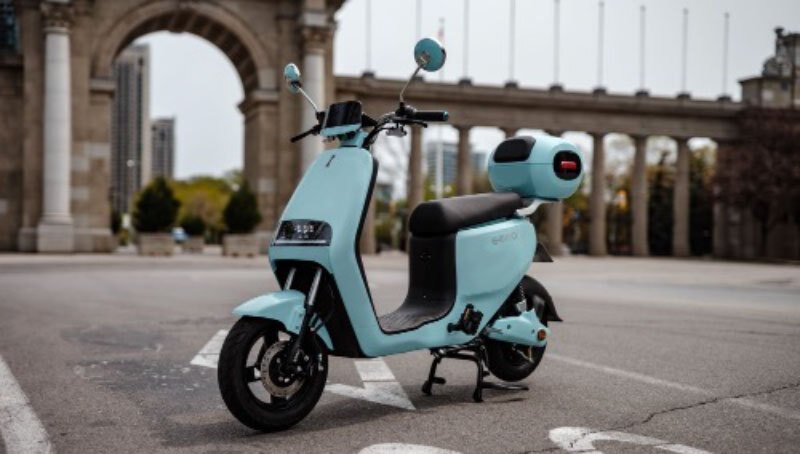
Mopeds are defined as vehicles with an engine size of 50cc or less. They are designed for low-speed travel, typically not exceeding 70 km/h. In Ontario, these vehicles are often used for short trips and are popular among younger riders due to their affordability and ease of use.
Scooters
Scooters encompass a broader range of vehicles, with engine sizes ranging from 50cc to over 300cc. This category includes many models of Vespas, which can be suitable for both city commuting and longer journeys. The performance and capabilities of scooters vary significantly based on their engine size.
Motorcycles
Motorcycles are defined as vehicles with larger engines, typically over 125cc. Many larger Vespas fall into this category, requiring a full motorcycle licence to operate legally. Understanding these classifications is crucial for determining the appropriate licensing requirements.
Licence Requirements in Ontario
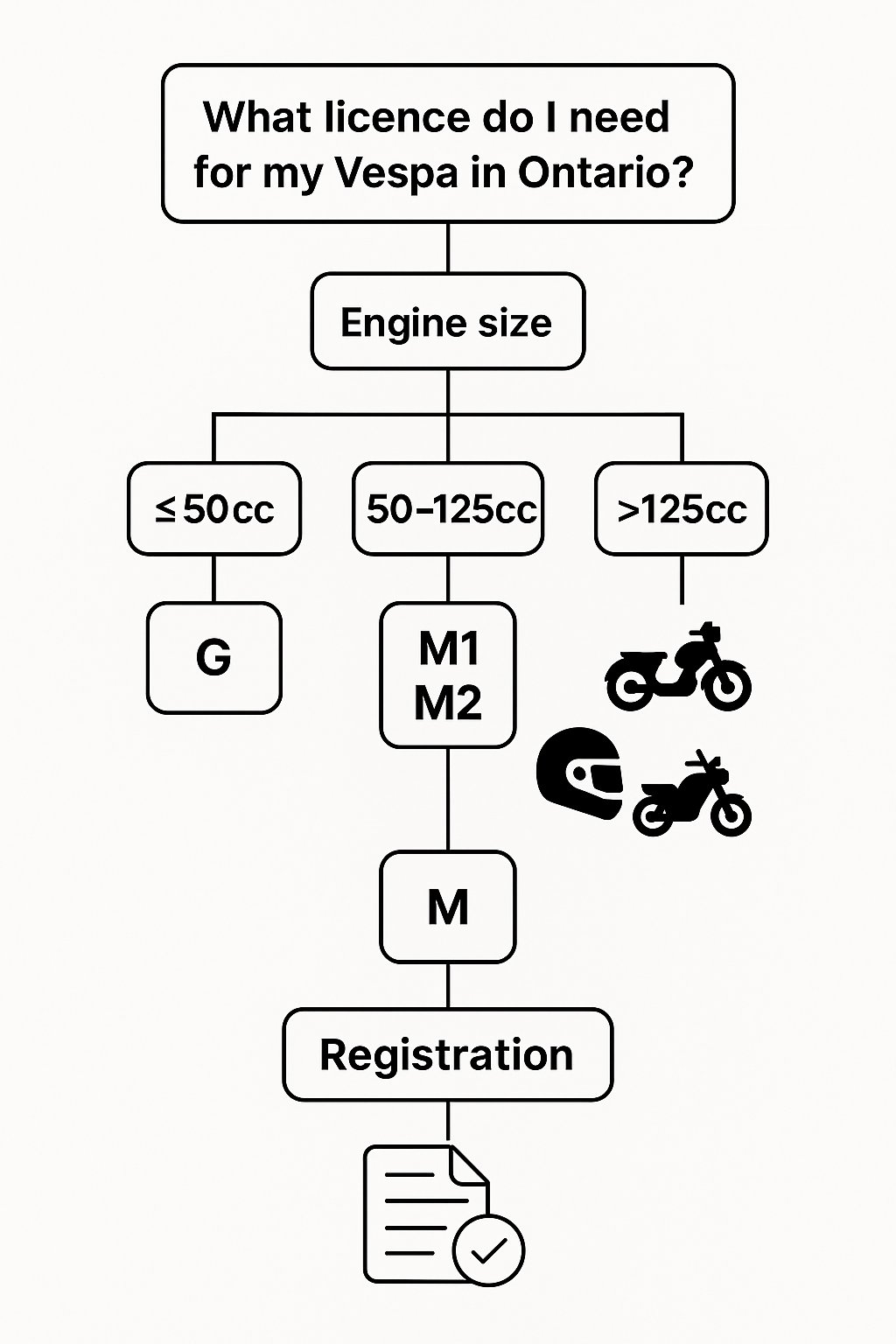
In Ontario, the type of licence you need to operate a Vespa depends on its engine size. Here’s a breakdown of the requirements:
|
Vespa Type |
Engine Size |
Licence Required |
Highway Legal? |
Notes |
|
Moped |
≤50cc |
M1 or G |
❌ |
Can be ridden with G2 under some restrictions |
|
Scooter |
50cc – 125cc |
M1 → M2 → M |
⚠️ Some highways |
Graduated licence system |
|
Motorcycle-style Vespa |
>125cc |
Full M |
✅ |
Requires advanced training and testing |
Mopeds (≤50cc)
For mopeds, you will need either an M1 or G driver’s licence. The M1 licence is a beginner motorcycle licence that allows you to ride under certain conditions, such as not riding after dark or carrying passengers. The G licence, typically associated with cars, may also be sufficient for operating a moped.
Scooters (50–125cc)
If your Vespa falls within the 50cc to 125cc range, you will need to obtain a motorcycle licence. The licensing process is graduated, starting with the M1 licence, followed by the M2, and finally the full M licence. Each stage has specific requirements and restrictions, including a practical road test.
Over 125cc (Large Vespas)
For Vespas with engines larger than 125cc, you will need a full motorcycle licence (M). These vehicles are treated as full motorcycles under Ontario law, meaning they can be operated on highways and require more extensive training and testing.
Minimum Age Requirement
The minimum age to obtain an M1 licence is 16 years. However, riders must be at least 18 years old to apply for a full M licence. This age requirement ensures that riders have sufficient maturity and experience to handle larger and more powerful vehicles.
Do I Need Insurance and Registration?
Regardless of the engine size, all Vespas must be registered with ServiceOntario and have valid insurance coverage. Here’s what you need to know:
Vehicle Registration
Every Vespa must be registered with the provincial government. This process involves providing proof of ownership and paying a registration fee. Once registered, your Vespa will receive a licence plate that must be displayed while riding.
Insurance Coverage
Insurance is mandatory for all scooters and motorcycles in Ontario. Riders must have at least third-party liability coverage, which protects against damages caused to others in the event of an accident. Failing to have insurance can result in significant penalties, including fines and potential legal action.
Penalties for Riding Uninsured or Unlicensed
Riding without proper insurance or a valid licence can lead to severe consequences. Penalties may include hefty fines, vehicle impoundment, and even criminal charges in some cases. It’s crucial to ensure that you are fully compliant with Ontario’s laws before taking your Vespa on the road.
? Warning: Riding uninsured or unlicensed can lead to fines of up to $5,000 and legal charges.
Safety & Legal Considerations
Safety is paramount when riding a Vespa, and Ontario has specific laws to ensure the well-being of all road users. Here are some key considerations:
Helmet Laws
In Ontario, wearing a helmet is mandatory for all motorcycle and scooter riders, regardless of age or experience. Helmets must meet safety standards set by the Ministry of Transportation. Failing to wear a helmet can result in fines and increased risk of injury in the event of an accident.
Parking and Road-Use Rules
Vespas are treated similarly to motorcycles when it comes to parking and road use. Riders must adhere to all traffic laws, including speed limits and lane usage. Additionally, parking regulations must be followed to avoid fines or towing.
Emission Standards & Annual Sticker Updates
All Vespas must comply with Ontario’s emission standards. Depending on the model and age of the vehicle, you may need to obtain an annual emissions sticker to demonstrate compliance. This requirement helps reduce environmental impact and ensures that vehicles on the road are safe and efficient.
Common Questions (People Also Ask)
Can I ride a 50cc Vespa with a G2 licence?
Yes, you can operate a 50cc Vespa with a G2 licence, as long as you adhere to the restrictions associated with that licence.
Do I need a motorcycle licence for a Vespa Primavera 50?
No, a Vespa Primavera 50, being a moped, can be ridden with an M1 or G licence.
What happens if I ride without the proper licence?
Riding without the appropriate licence can lead to fines, vehicle impoundment, and potential legal repercussions.
Are Vespas allowed on highways in Ontario?
Only Vespas with engines larger than 125cc are permitted on highways, provided the rider holds a full M licence.
How much does Vespa insurance cost in Ontario?
Insurance costs vary based on factors such as the rider's experience, the model of the Vespa, and coverage options. On average, expect to pay between $300 to $800 annually.
Tips for New Vespa Owners
If you’re considering purchasing a Vespa, here are some tips to help you get started:
Take a Motorcycle Safety Course
Consider enrolling in an MTO-approved motorcycle safety course. These courses provide valuable training on safe riding practices and can help you pass the necessary tests to obtain your license.
? Pro Tip: Always start with an MTO-approved motorcycle safety course—it helps with licensing and rider confidence.
Start with a Smaller Engine Vespa
If you’re new to riding, starting with a smaller engine Vespa can help you build confidence and skills before moving on to larger models.
Join Vespa or Scooter Clubs
Connecting with local Vespa or scooter clubs can provide a sense of community and support. These groups often organize rides, events, and safety workshops, making it easier to meet fellow enthusiasts.
Conclusion
In summary, yes, you need a licence to operate a Vespa in Ontario, but the specific type of licence required depends on the engine size of the scooter. Understanding these requirements is essential for ensuring a safe and legal riding experience. Always prioritize safety, seek proper training, and comply with Ontario’s regulations. Before purchasing your Vespa, make sure to check which licence applies to your model to avoid any legal complications.
Ready to hit the road with your Vespa? At Maxxim Motorsports, your trusted Vespa Scooter Dealer in Oakville, Ontario, we're here to help you find the perfect scooter and guide you through the licensing requirements. Visit us today to explore our wide selection of Vespa models, and our knowledgeable team will ensure you’re fully informed and ready for a safe and enjoyable ride